
Wayne Dalton Garage Door Repair in Allentown: A Homeowner’s Guide
Wayne Dalton garage door repair in Allentown typically costs between $180 and $420 depending on whether you’re dealing with a torquemaster spring issue, panel damage, or opener alignment, and most repairs can be completed same-day by a technician with actual brand experience. The critical difference is that Wayne Dalton’s proprietary torquemaster spring system requires specialized tooling and knowledge that many general repair services simply don’t have—meaning a “fixed” door can leave you with uneven lift, premature cable wear, or a safety hazard you won’t notice until it fails again. If you’d rather not gamble with a technician who’s learning on your door, call (877) 730-7790—Stephen shows up himself, and Wayne Dalton is one of the eight brands we’ve worked on for 14 years.
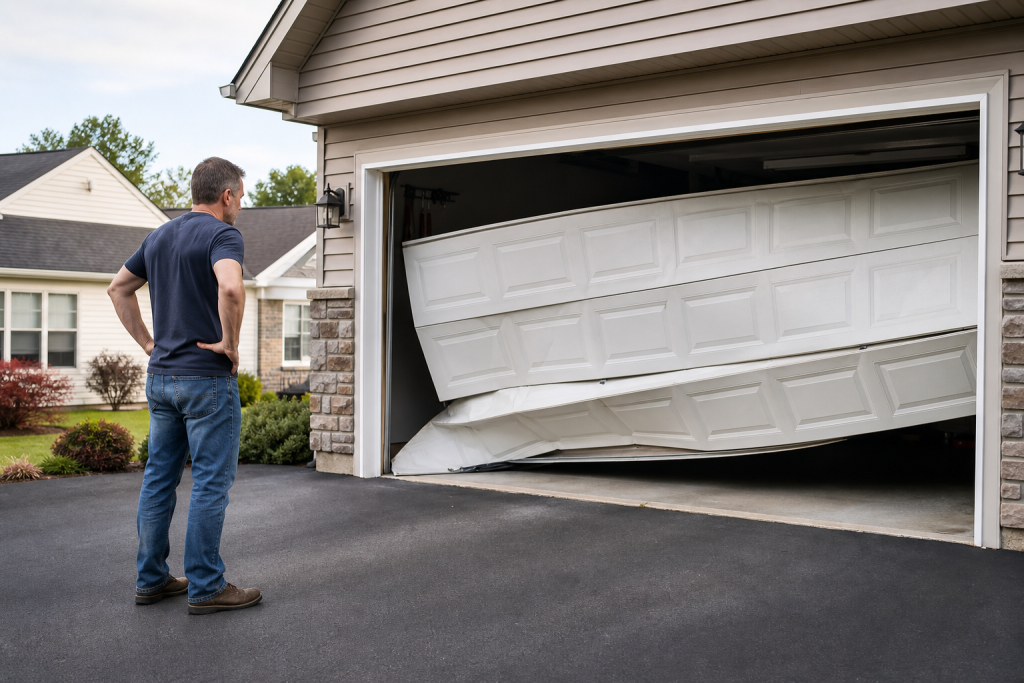
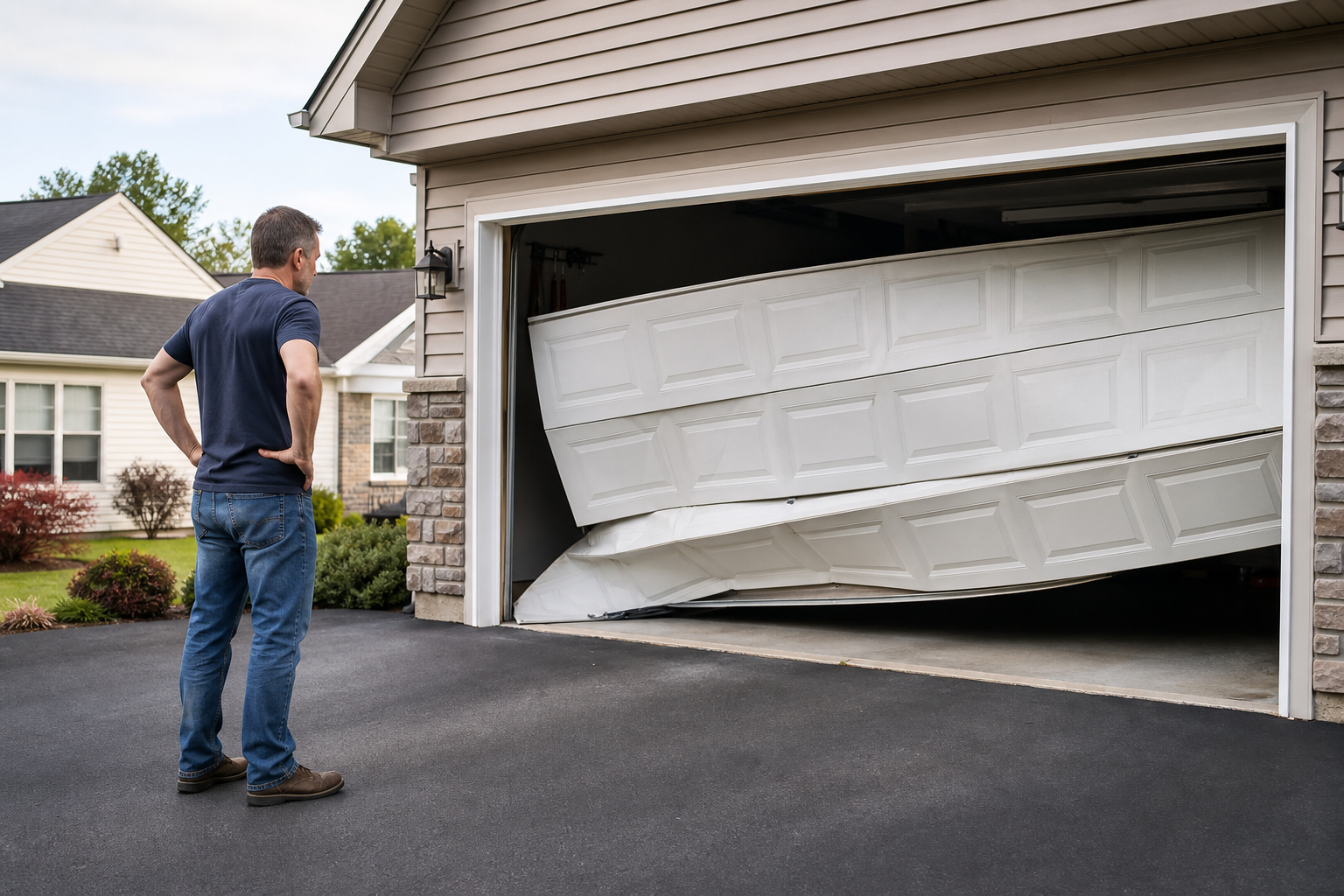
Here’s the thing I see most often when I’m called out to fix someone else’s “repair” on a Wayne Dalton door in Allentown: the previous technician swapped the torquemaster system for a standard torsion conversion, bolted it up, and called it done. The door goes up and down, so the homeowner pays. But they didn’t adjust the cable drum geometry for the door’s actual weight, didn’t check the header deflection, and didn’t recalibrate the opener force settings. Six months later, the cables are frayed, the opener is straining, and the door is running crooked. We pulled one out of a garage over in West End Allentown last month where the conversion had been done so poorly the top panel was actually buckling from uneven tension. The homeowner thought they were getting a permanent upgrade. They got a slow-motion breakdown.
How Wayne Dalton’s Torquemaster System Actually Works
Wayne Dalton’s torquemaster spring system is fundamentally different from the standard torsion setup you’ll see on Clopay or Amarr doors. Instead of a visible spring wound around a shaft above the door, the torquemaster hides the spring inside a steel tube. A winding cone at one end allows tension adjustment without the same level of exposed energy that makes standard torsion springs dangerous to untrained hands.
This design served two purposes when Wayne Dalton introduced it: cleaner aesthetics and reduced liability from spring-related injuries. But it also created a closed ecosystem. You can’t walk into a generic supply house and grab torquemaster parts. The winding tools are proprietary. The spring ratings are specific to Wayne Dalton’s engineering. And here’s where Allentown’s housing stock matters: neighborhoods like Trexler Park, Cedar Crest, and parts of South Allentown saw heavy Wayne Dalton installation in 1990s and early-2000s developments. Those doors are hitting 20–30 years now, and the technicians who originally installed them have often retired or moved on.
What this means practically:
- Torquemaster springs fatigue differently than standard torsion springs—the enclosed design traps heat and can accelerate coil memory loss in Allentown’s humid summer garages
- The tube assembly can corrode internally where you can’t see it, especially in older garages with poor ventilation near the Jordan Creek watershed
- Replacement requires knowing the door’s exact model year and size—Wayne Dalton changed tube diameters and end fittings multiple times
- Generic “universal” conversion kits often ignore the door’s original engineering margins
We’ve worked on enough of these in Allentown to recognize the model from the exterior panel pattern. That’s not bragging—it’s the difference between showing up with the right parts and making a second trip after a parts run.
The Conversion Debate: When Torquemaster-to-Torsion Makes Sense
Let’s address the question directly: should you convert your Wayne Dalton torquemaster system to standard torsion springs?
Sometimes yes, sometimes no. The honest answer depends on four factors I check on every Allentown job:
- Door age and condition: If the panels are delaminating, the hinges are wallowed out, or the track is original to a 1995 installation, converting the spring system on a dying door is throwing good money after bad. In Emmaus and Macungie, we’ve seen Wayne Dalton doors from that era where the steel back panels have actually separated from the vinyl facing.
- Parts availability: Wayne Dalton discontinued several torquemaster variants. For doors manufactured between roughly 1998 and 2008, finding an exact replacement spring can mean hunting obsolete inventory or fabricating a workaround. When I hit that wall, I’ll explain the conversion option honestly.
- Header and track condition: Standard torsion springs exert different loads on the header and end bearing plates. If your garage header is a doubled 2×10 that’s showing age, or if the jambs aren’t properly backed, a conversion can stress structure that was marginal to begin with. Allentown’s older stock—particularly pre-war homes in the 7th Street corridor—often has this issue.
- Opener compatibility: Wayne Dalton doors, especially the fiberglass and steel models, were engineered with specific weight and balance characteristics. A conversion changes those characteristics. Your opener—whether it’s a LiftMaster, Chamberlain, or Genie—needs its force and limit settings recalibrated, not just plugged back in.
A proper conversion isn’t just “take out the tube, put in a spring.” It requires:
- Calculating the correct spring wire size and length for the door’s actual weight, not its sticker weight (paint, reinforcement struts, and hardware additions all matter)
- Selecting cable drums matched to the door’s lift type and new spring moment
- Verifying vertical track plumb and horizontal track level after the geometry change
- Testing and adjusting opener force settings with a calibrated scale
The shortcut version skips most of this. The door moves. It fails early. And the homeowner blames the door, not the installation.
Common Wayne Dalton Issues in Allentown’s Older Homes
Allentown’s development patterns created concentrated pockets of Wayne Dalton installations. In the 1990s, several regional builders spec’d Wayne Dalton 9100 and 9600 series doors across subdivisions now part of the Parkland and Salisbury Township school districts. Those homeowners are hitting a predictable maintenance wall.
The problems we see repeatedly:
- Fiberglass panel delamination: Wayne Dalton’s fiberglass doors looked sharp when new, but the gel coat eventually cracks and moisture gets between the skin and core. Allentown’s freeze-thaw cycles accelerate this. Once water gets in and freezes, the panel bows and the door binds in the track.
- Steel edge cracks at hinge points: The 9100 series used a thinner-gauge steel with stamped hinge reinforcement. After 15,000–20,000 cycles, stress fractures appear at the top roller bracket and bottom fixture. We’ve replaced dozens of these in the Fullerton and Cetronia areas.
- Bottom seal extrusion failure: Wayne Dalton’s proprietary bottom seal retainer uses a specific T-shaped profile. Generic replacements don’t seat properly, leaving gaps that let in water, leaves, and the road salt that collects on Allentown streets from December through March.
- Operator bracket tearing: The original Wayne Dalton operator reinforcement bracket was stamped aluminum on some models. When an aging opener strains against a poorly balanced door, the bracket tears away from the top panel. This isn’t an opener problem—it’s a door balance problem showing up at the weakest link.
When Stephen shows up to evaluate one of these, he’s checking the whole system, not just the complaint. A customer in Allentown’s West Park neighborhood called for a “broken spring” last year. The spring had failed because the door was so far out of balance from delaminating panels that the opener had been compensating for years. Fixing just the spring would have meant a second failure in months.
How to Tell If a Technician Actually Knows Wayne Dalton
This is where I get practical, because I’ve cleaned up after enough “garage door repair” ads that lead to a kid with a pickup and a spring chart. Here’s what to ask, and what real answers sound like:
| Question | Red flag answer | Confident answer |
|---|---|---|
| “Do you work on Wayne Dalton torquemaster systems?” | “Yeah, we do all brands” (vague, rushed) | “Yes, I carry the winding tools and stock the common spring sizes for 6000, 8000, and 9000 series doors” |
| “Will you convert to standard torsion, and why?” | “Standard springs are better, everyone does it” (one-size-fits-all) | “Depends on your door’s condition, the parts availability for your model year, and whether your header can handle the different load distribution” |
| “What Wayne Dalton models have you repaired this month?” | Deflection, generic claims | Specific model numbers, specific neighborhoods, specific failure modes |
| “Do you adjust the opener after spring work?” | “The opener should be fine” or “We can look at it” | “Spring changes always require force and limit verification—I’ll test it with a scale and adjust the travel” |
The technician who knows Wayne Dalton will ask you about your door’s model number before quoting. They’ll know that a 9605 is different from a 9700. They’ll have an opinion on whether your door was made in the Mt. Hope, Ohio facility or after the corporate changes that shifted manufacturing. These details matter for parts compatibility.
When to call a pro: If your Wayne Dalton door is stuck open, stuck closed, making grinding noises from the tube, or showing visible panel damage, stop operating it. Forced operation on a compromised spring system can damage the opener, warp the track, or—worst case—cause the door to fall. In 14 years, we’ve seen two injuries from homeowners attempting to manually lift a door with a failed torquemaster spring. Both involved underestimating how much weight the spring had been carrying.
Related services in Allentown: If you’re considering whether to repair or replace, our Garage Door Installation in Allentown page covers current options for homeowners with aging Wayne Dalton doors. For opener-specific issues, see Garage Door Opener in Allentown.
Repair vs. Replace: The Reality for Doors Over 15 Years
Here’s the conversation I have most often with Allentown homeowners, and I never rush it. A Wayne Dalton door from 2005 can absolutely be repaired. The question is whether it should be.
Parts reality: Wayne Dalton has consolidated its product line. Several panel profiles, window inserts, and hardware kits from the 1998–2010 era are discontinued. We maintain relationships with distributors who stock obsolete inventory, but there’s no guarantee we’ll find an exact match for your door’s color and design. If you have a white 9100 series door, we’re probably fine. If you have sandstone fiberglass with arched stockton windows, matching becomes a treasure hunt.
Cost framework for Allentown (these are real ranges from our 2024–2025 jobs):
- Torquemaster spring replacement: $220–$340
- Standard torsion conversion (properly executed): $380–$520
- Panel replacement (when available): $180–$400 per panel
- Bottom fixture/hardware refresh: $140–$260
- Full door replacement, basic steel insulated: $1,200–$1,800
The math shifts when multiple components are failing. A door needing springs, a panel, and new rollers is often halfway to replacement cost. But I won’t push replacement for replacement’s sake. In Allentown’s West End, we repaired a 2002 Wayne Dalton 9600 last spring because the homeowner loved the door’s fit with their home’s architecture, the panels were solid, and the track was in good shape. The repair cost $340 and should give them another 8–10 years.
Conversely, we advised replacement on a 1997 door in Salisbury Township where the panels were delaminating, the track was rust-pitted from a leaking roof gutter, and the opener was a 20-year-old Genie that predated current safety standards. Repair would have been possible. It wouldn’t have been smart.
The Bottom Line
Wayne Dalton doors in Allentown deserve brand-specific attention, not generic garage door repair. The torquemaster system is neither inherently better nor worse than standard torsion—it’s different, and that difference matters for tooling, parts, installation technique, and long-term performance. If your door is showing its age, get an honest assessment from someone who can articulate the repair-versus-replace tradeoffs without a sales agenda.
Key takeaways:
- Wayne Dalton’s torquemaster system requires proprietary knowledge—generic spring replacement often creates new problems
- Allentown’s 1990s–2000s housing stock has concentrated Wayne Dalton installations now hitting critical maintenance age
- Conversion to standard torsion is sometimes right, sometimes wrong—depends on door condition, parts availability, and structural factors
- Ask specific questions to verify actual Wayne Dalton experience, not just general garage door work
- Parts obsolescence is real for older models; factor this into repair-versus-replace decisions
If you’re in Allentown and need help with a Wayne Dalton door, Cardinal Garage Door Service Greater Allentown offers free estimates—call (877) 730-7790. Stephen shows up himself, and we’ll tell you straight whether repair or replacement makes sense for your specific door.
Frequently Asked Questions
Most Wayne Dalton repairs in Allentown run between $180 and $420, with torquemaster spring work typically at the lower end and full conversions or panel replacement at the higher end. The exact cost depends on your door’s model year, the specific failure, and whether proprietary parts are still available. Call (877) 730-7790 for a free estimate—we’ll give you a firm number after seeing the door.
Technically anyone can attempt it, but we’ve found that many general repair services lack the winding tools, spring inventory, and calibration knowledge to do it correctly. A botched torquemaster repair or sloppy conversion often leads to uneven door operation, premature cable wear, and opener strain that shows up months later. Ask specifically about torquemaster experience and whether the technician carries Wayne Dalton-compatible parts.
Sometimes yes, sometimes no. Conversion makes sense when your torquemaster parts are obsolete, your door is otherwise in good condition, and your garage header can handle the different load distribution. It doesn’t make sense when the door itself is failing, when the conversion is done without proper spring calculation and cable drum matching, or when a technician treats it as a universal swap. We’ve seen both excellent conversions and expensive mistakes in Allentown homes.
Evaluate three things: panel integrity (no delamination, cracks, or severe rust), track condition (straight, securely mounted, not pitted), and hardware availability (can we still get the specific parts your model needs). If two of these three are compromised, replacement is usually the better long-term value. For doors under 15 years with isolated spring or opener issues, repair typically wins. We’ll walk you through this assessment on any service call—no pressure, just the facts for your specific door.
Written by Stephen Rogers, Owner & Lead Technician at Cardinal Garage Door Service Greater Allentown, serving Allentown since 2012.
Need Garage Door Help?
Call Cardinal Garage Door Service Greater Allentown — licensed & insured, available 24/7 in Allentown.
(877) 730-7790